
Prof. Ing. Martin Lukáč, PhD., shares his journey to international science, his experiences from collaboration between a British university and the Faculty of Forestry and Wood Sciences CZU, and presents the ReForest project, which seeks ways to reintroduce trees into agricultural landscapes in a sustainable and practical manner.
Interview conducted by: Hana Brinkeová, July 2025

Do you remember when it first occurred to you that you might pursue a career in science? What set you on that path – was it a particular topic, a teacher, or perhaps a coincidence?
Like most things in science, it was a pure coincidence. In 1995, I went as a student on an exchange internship to Bangor in North Wales, where I met my future wife. After completing my studies in Slovakia, I returned to Bangor – and doing a PhD seemed like the simplest option that came to mind at the time. It may sound wild, but that is how it happened. I first wrote my own project – it was about the natural regeneration of spruce in North Wales – and began my PhD studies. However, at the very first meeting, my supervisor informed me that he would retire in two months. I walked out into the corridor feeling quite confused, but my future wife reacted quickly. She pointed out a note on the notice board that another professor was looking for a PhD student. I went to see him – and that is how my collaboration with Douglas L. Godbold began, which continues to this day. We have been co-authoring papers for over twenty years.
So, if I were to say that I had a plan or a strong motivation to become a scientist, that would not be true. It was a pure coincidence. In fact, almost all the research I have ever been involved in began completely by chance – a conversation over coffee, or in a pub, and suddenly we had an idea we wanted to test. There have been many such “coincidences.” Looking back now at how I got to where I am, it is really a series of major coincidences.
What do you still enjoy about scientific work and what drives you forward – and what is the most challenging aspect of it?
I enjoy it mainly because of the constant asking of “why” and “how things work”. I’ve always liked poking into things and examining them in depth. I have three children and I often remember how they used to ask “why?” over and over again, and in a way I think I may have become stuck at that age – because I still keep asking questions. I want to understand how things work, why something happens, and how it relates to other phenomena, and that’s probably the main reason I enjoy it.
The second essential reason why I like this job is that, in my view, it’s the best work in the world; at a university we are essentially freelancers. We do what we want in areas that interest us, as if we were entrepreneurs, and at the same time we don’t have to worry about getting our wages at the end of the month. Of course, not everything always works out: some research turns out brilliantly, others don’t, but that’s normal and I’ve learned not to get stressed about it – you can’t win every day, after all.
And what’s the hardest part? For me personally, it’s probably the fact that most of the projects I’m involved in aren’t funded. It means that people put in their time and energy, spend months working on something – and in the end, nothing comes of it. No output, no follow-up, no money. That’s frustrating from another angle as well: knowing I have talented PhD students and colleagues around me whom I’d like to support, but I don’t have the funding for them. I can’t offer them a job or further development, even though I know they would be successful. And that’s probably the hardest part for me.
Scientific papers are no longer the main measure of success for me. There are so many of them that I don’t even keep track of all the ones I’m listed in. But not being able to help move forward the people who truly deserve it, that’s what saddens me the most.
When we focus on today’s challenges – what do you consider the biggest issue that scientists working in ecology, climate, and landscape management must address?
I think the biggest problem is communicating science to the public; in other words, how to convey scientific findings to people outside the academic world. We scientists understand the results – we know which ones are robust, which are borderline, and what can or cannot be inferred from them. That’s our everyday bread and butter. But when we try to talk about these things with someone who doesn’t have experience in scientific work, they often expect a clear and simple answer: “So what should I do when we have a climate crisis?” Yet there is no precise or straightforward answer to that. And as soon as I start explaining that it isn’t black and white – that data have variability, that results must be interpreted cautiously – I lose that person. They stop being interested. That’s why I believe it’s not just scientific communication itself that fails, but also the media, which often lack the space or the willingness to convey these nuances. This then creates room for various “charlatans” who offer simple answers and challenge serious research.

You have been working long-term not only in the Czech Republic but also in the United Kingdom, and you collaborate with teams in other countries as well. What do you see as the greatest benefit of this international scope? For instance, what can a scientist learn abroad that they might not learn at home?
I think that international collaboration in science is absolutely essential – and this applies not only to different institutions but also to different cultures.
Science is always influenced by where you come from. Even when looking at the same problem, people from different countries – or even just different cultural backgrounds – often see it differently. If I stayed my whole life in Britain, I might start viewing the world only through the lens of a “white British scientist.” But there are over 60 million people in Britain – and 8 billion people in the rest of the world. Thanks to the international dimension, I come into contact with perspectives I might never have thought of. Often, I turn up to an international meeting with a proposal – and most people look at me as if to say, “That definitely won’t work.” It’s excellent feedback that forces you to think differently.
Do you think there is anything within the academic environment that you learnt in Britain, but wouldn’t have learnt here if you had stayed?
Well, that’s a good question. It’s hard to answer precisely, but if I compare it, the key difference from when I studied in Slovakia is that back then science was very focused on local Czechoslovak issues. When I arrived in Bangor, science was globally oriented right from the start. I think, however, that over the past decade things have changed in both the Czech Republic and Slovakia – research is becoming more open to the world. Still, I believe we have some catching up to do when it comes to building international contacts. Often, it’s a mindset issue – for example, when I needed to get in touch with someone from South America in the UK, I just emailed a colleague, and within a few days we were collaborating. In Slovakia, it would more likely have been: “Well, what if it doesn’t work? Better not even try.”
How would you describe your current research focus in Britain?
Gradually, my research focus has been shifting – I used to concentrate mainly on plant ecology and soil science, but these days I am increasingly delving into the social sciences. Not that I want to become a sociologist, but contemporary applied science no longer works in a way where you can simply write a project on observing tree growth in waterlogged soil and secure a grant. Today, you also have to involve the people who actually manage those trees in your research. You need to ask why they make the decisions they do and how to communicate the results to them. This shift is driven both by changes in the entire scientific system and by my own personal development. I’ve reached the point where I’ve realised that collaborating with people in the field – those who actually manage the landscape – is crucial. I can study whatever I like, but if it can’t be applied in their daily practice, it’s largely pointless.
My original specialisation comes from the Faculty of Forestry in Zvolen, where I earned my engineering degree. I then completed my PhD on forest soils – specifically, how soil affects plants and how plants affect the soil. Most of my publications focus precisely on this relationship between vegetation and soil processes.
You have also been working for some time at the Faculty of Forestry and Wood Sciences at CZU in Prague. What does this combination of academic environments bring you?
The greatest benefit of being exposed to two different university and cultural environments is the opportunity to recognise practices that work well and adapt them to the other setting. I think this is very important and probably lies at the very heart of the idea of an academic sabbatical – a period when a faculty member has the chance to work at an institution in another country, or even on another continent.
Then there is the networking effect – I have access to two complementary networks of experts, which greatly facilitates, for example, the preparation of European research projects. I can easily find people with the necessary expertise and connect them so they can start collaborating.
I don’t want to reinvent the wheel here – there are many European or bilateral funding programmes specifically designed for this purpose: to support international collaboration, knowledge exchange, and the linking of expert capacities. These programmes exist because their benefits are well known, and what I experience personally is just a small example of that in practice. And, of course, whenever I’m in Prague, I like to enjoy a good beer in the evening – so everything is as it should be.

One of the projects you are involved in is ReForest, an international project which you coordinate at the Faculty of Forestry and Wood Sciences. Could you give us an overview?
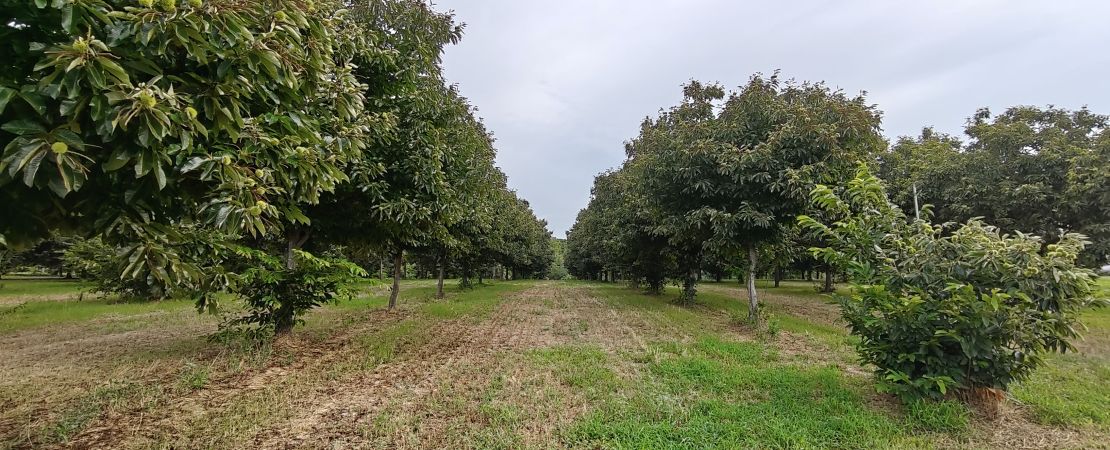
The main goal of the ReForest project is clear – to increase the presence of trees in the landscape. When people invented agriculture 6–7 thousand years ago, the first thing they had to do was remove the trees to grow food. That was fine at a time when there were only two million people on the planet, but it’s no longer fine now that we are approaching eight billion. Over that time, we have cut down roughly half of the world’s trees. Continuing in this way is simply not sustainable. This is precisely where agroforestry comes in – a method of land management that allows people to grow crops or raise livestock as before, but at the same time integrates trees into agricultural landscapes.
It’s not about turning fields into forests – that would mean losing food production. Ite’s about how to bring trees back into the landscape so that it can continue to provide us with food, while also offering other benefits: shade, water retention, improved soil, space for biodiversity, and so on.
I think you’ve captured the essence of agroforestry very well. What I’m still curious about in this context is why it’s receiving so much attention today – why has it suddenly become such a boom, given that it’s not an entirely new idea?
Yes, you’re right, agroforestry is not a new idea. The principle has been around for thousands of years. If you imagine the first settlers who came to Central Europe, they found a landscape full of forests. Some areas were more open thanks to herbivores, but for the most part, there were trees. The edge of a field would gradually merge into a sparse woodland where animals grazed. Grazing in the forest was completely normal back then. However, this natural model disappeared after the Second World War. Large-scale agricultural machinery emerged, which required the largest and most continuous fields possible – so trees began to be systematically removed from the landscape. In our region, collectivisation also contributed to this. The result was that we lost a centuries-old, time-tested way of managing the land.
And why has agroforestry become a topic of discussions? That’s a bit of a mystery even to me. In Britain, we tried to promote it for 20–30 years, and hardly anyone was interested. There were a few enthusiasts among farmers, but really only a handful. Then, over the last five years, something changed. Agroforestry has suddenly made its way into national subsidy programmes; in Britain, there are now specific supports directly for these systems. That didn’t exist here at all before. I think one reason is that people have become more aware of the climate crisis. Public surveys clearly show that 80–90% of people now believe it is a real problem. About five years ago, we had a project where we asked ordinary people on the street what they could do to address the climate crisis. The number one answer was: “We’ll go and plant trees.” Not that this alone would solve the climate crisis, but it’s a clear and tangible step that makes sense to people. And since 70% of Britain’s land is agricultural, where else would you plant trees if not there?
So what is the main goal of the ReForest project?
In the ReForest project, we are working to ensure that farmers across Europe begin to see agroforestry systems as an attractive and beneficial choice. Our goal is to create a support framework – financial, informational, and practical – that makes this possible. When we ask farmers why they don’t practice agroforestry, the number one answer is: “Because it would cost me too much,” and the number two answer is: “I don’t know how to manage trees; that’s something only foresters do.” Of course, we don’t expect 100% of European farms to switch to agroforestry, but the more that do, the better it is for both the landscape and society.
So how exactly does the ReForest project aim to help people in practice, such as farmers and land managers? Do you have a practical example of something that has already been achieved?
ReForest operates on the principle of so-called living laboratories – there are currently seven of these in the project, scattered across various European countries. In each one, we work directly with farmers and practitioners. We ask them what they need, what interests them, what holds them back, and what they feel is missing. Together, we try to establish supportive systems – financial, communicational, and practical – so that agroforestry makes sense to them and is accessible. We do not attempt to impose ready-made solutions from “above”. On the contrary, we ask the farmers: how would you like us to share information with you? Do you need a video, an email, a booklet sent by post, or a repository of information? The project therefore operates through collaboration with people who are actually practising it.
The project, funded by the EU, involves 13 partners from various countries. This is a fairly large consortium. In your opinion, what is the biggest obstacle to the wider adoption of agroforestry? Is it more a question of finance, policy, or perhaps people’s attitudes?
It’s a combination of all three things you mentioned – finance, policy, and people’s attitudes. Let’s start with finance: when we talk to farmers who grow, for example, wheat, they have a precise calculation of how much they earn from it each year. And when someone tells them that a strip of trees should be planted across their fields – perhaps only two metres wide, but recurring every 30 metres – they immediately know that wheat will not grow in those areas. And that means lower yields for them, and therefore lower income. The second problem is that most farmers in Europe operate on the edge of economic sustainability. Agriculture is hardly a huge business anywhere in Europe, and it’s not easy to make large profits from it.
Another obstacle is lack of knowledge. Many farmers previously didn’t even know what agroforestry actually is. The situation is somewhat better today – most of them now at least have a basic understanding, and often they even come with specific ideas. They ask questions like: which trees should be planted? At what density? How should it be managed? How can it be integrated into my business? So here we can see a significant shift in their awareness.
Do you think that change in attitude is partly thanks to the awareness-raising from your project?
As the project leader, I can only say: “Of course, it’s all thanks to us…” (laughs).
So what else could help to bring about change? I suppose it’s a long-term process.
Yes and no. For example, an interesting approach is the hybrid financing system we are currently proposing in one of our articles. It combines public funds (e.g., subsidies) with private investment. Private investors usually operate on a fairly short time horizon, so even in the case of financing these systems, it doesn’t necessarily involve a long-term commitment.
And then there is the sharing of inspiring practical examples – a farmer somewhere in Europe comes up with an idea, and our role is to capture it, process it, and make it available to others. This is why, as part of the ReForest project, we created a multilingual web platform that collects these examples and guides. The main benefit is that the platform operates in 24 languages (!) simultaneously. One of the biggest issues in scientific communication is that most information exists only in English. That’s fine if you’re in Britain – but if I visit a farm in the Czech Republic and everything is in English, it’s simply a barrier. That’s why we built our platform so that users can choose their own language – for example, Czech – and all the content is displayed in an easily understandable form. They can then easily participate in discussions with farmers from other countries, because the translation happens automatically.

So what is the motivation for a farmer to get involved in agroforestry?
I can answer that precisely, because we asked the farmers directly – specifically the wealthiest ones in southeast England, where agriculture is the most profitable and where planting trees would theoretically mean the greatest financial loss. We wanted to know: “Why would you want to plant trees on your farm?” The most common answer was surprisingly idealistic – “I want to take care of the landscape.” These farmers want to pass their land on to the next generation in better condition than they received it. They see planting trees as one of the simplest and most effective steps to achieve this. The second reason is the desire to support biodiversity. And the third reason is more pragmatic – income diversification. Agriculture today is full of uncertainties: climate change, price fluctuations, soil problems, etc. If a farm earns income from only one crop and something goes wrong, the consequences can be serious. Trees provide a different type of yield – often longer-term but more stable – helping to reduce financial risk.
That sounds logical. But it seems to me that here in the Czech Republic, the topic of biodiversity as a motivation doesn’t really resonate yet – that’s something that will still need to be worked on.
You’re right – and it took me quite a long time to even notice the difference between Central Europe and Britain. When you come from Central Europe, you usually see the landscape divided into three parts: towns and villages, agricultural land, and forests. And in Slovakia, the forest is “the place where the bears live” (laughs) – wilderness that has its own designated zone. But in Britain, people often see it differently – the landscape is divided into just two parts: built-up areas (towns and villages) and farmland. The “wild part” has practically disappeared. And that’s perhaps why people feel a much greater need to help nature. They realise that they’ve almost completely “used it up,” and that something needs to be done.
One last, light-hearted question. If you had to choose one object (and I really mean a “thing”) to represent you on your desk, what would it be – and why?
(laughs) Phew… Don’t you have an easier question? Well, alright, I’ll answer honestly and won’t dodge it. A pencil and paper. Not that I write much on it – I mostly scribble diagrams and sketches while thinking or during conversations. When I’m talking with students or colleagues, about a project or a new idea, I immediately start drawing – it helps me clarify things in my mind. For a long time, I thought it was just a thinking tool for myself, and I would throw the papers away after each discussion. It wasn’t until a few times when a student said, “Can I take this?” that I realised it might actually help others too.
This project has received funding from the European Union’s Horizon Europe research and innovation programme under grant agreement No. 101060635 (REFOREST). Views and opinions expressed are however those of the author(s) only and do not necessarily reflect those of the European Union or the European Research Executive Agency (REA). Neither the European Union nor the granting authority can be held responsible for them.