

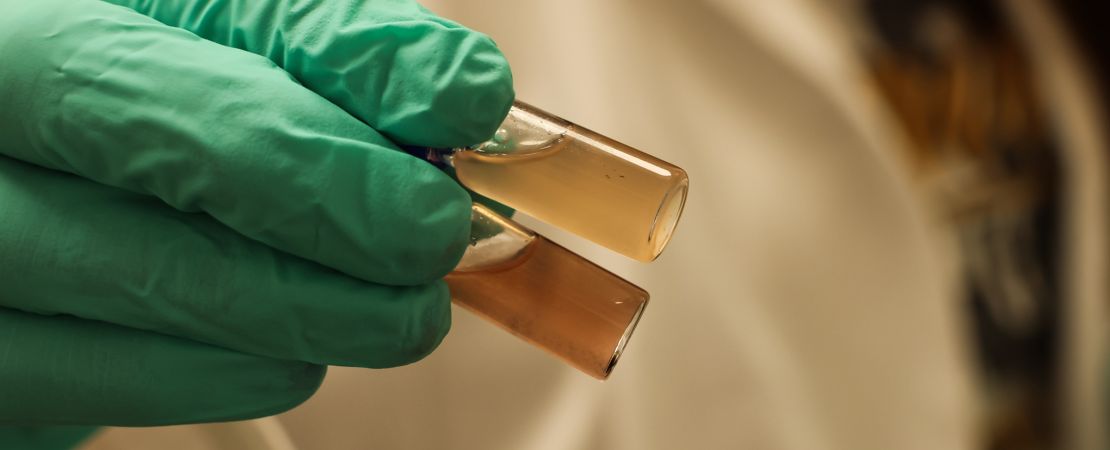
Bojana Bradić, recipient of the prestigious European ERA Talents grant, shares her scientific journey from Serbia to the Faculty of Forestry and Wood Sciences at CZU, where she is now developing her research.
Interview by: Hana Brinkeová, November 2025
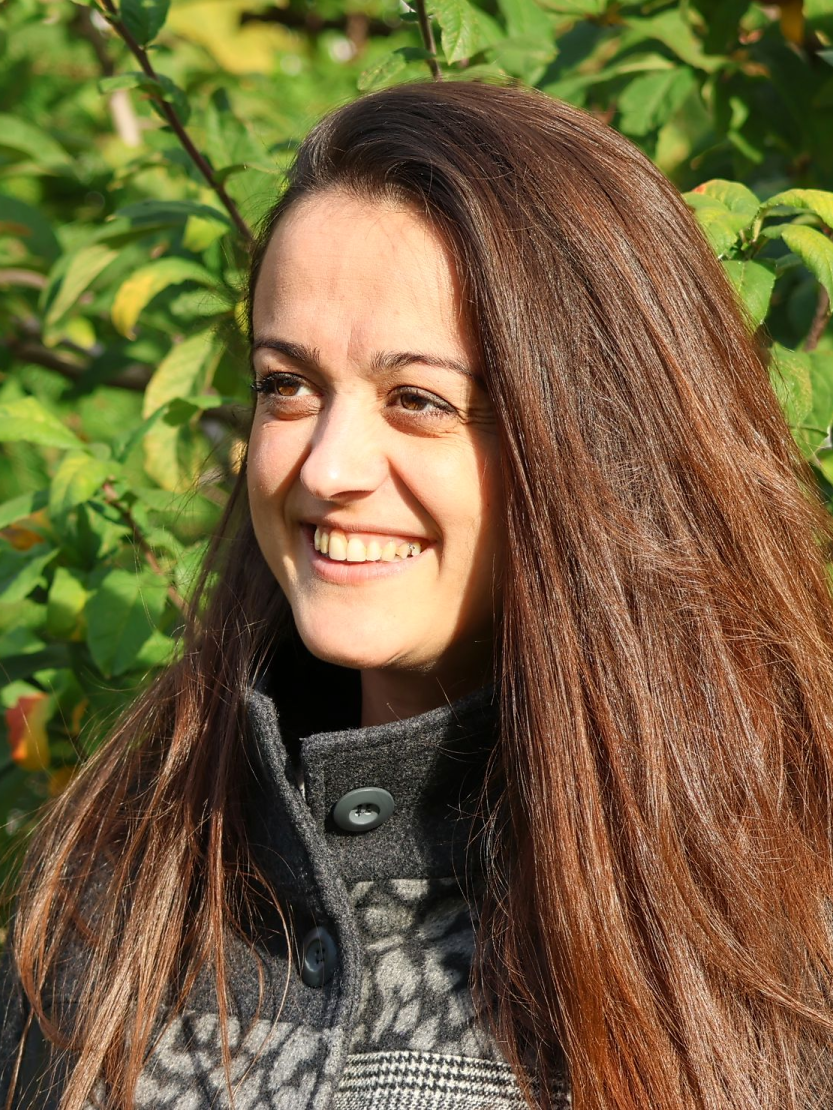
Bojana, could you briefly introduce yourself and tell us how you came to pursue a scientific career?
My name is Bojana Bradić and I am originally from Serbia, from Belgrade. However, I was born and raised in a small town in western Serbia until I was about 15 years old. When I moved to Belgrade, I realized that the city where you live becomes part of your identity and origin, and is really closely connected to you. I studied biochemical engineering in Belgrade and already during my studies I was introduced to research and laboratory work. My thesis was on enzymes and enzymatic reactions, in the field of biochemical engineering. Even then, I knew that I wanted to continue and advance in the field of science, and I was actively seeking possibilities to continue my scientific work.
So you went on to do a PhD?
I wanted to continue my scientific ambitions and enrol in a doctoral programme at the department where I had completed both my bachelor's and master's studies. However, in my home country, securing sufficient financial support that provides financial stability necessary for a dignified and focused academic life is challenging. One of the few available options is a state scholarship, which is not enough. For this reason, I decided not to pursue my PhD in Serbia. Instead, I moved from academia and began to work in industry as a process engineer. After two years, I found an opportunity to be back in research, relocated to Slovenia, and started a PhD at a different university, with additional financial help from my home country. The PhD project focused on converting various waste materials into valuable chemical and biochemical building blocks using green chemical methods. Although still rooted in chemical engineering, the work was much more research oriented. I spent nearly five years in Slovenia and completed my PhD.
So you obtained your PhD in Slovenia?
Yes. After completing my studies, I returned to Serbia. My journey in science has always been closely linked to the issue of finance. Access to resources, equipment, and grants was very limited in my country, which is a big problem for many young scientists. It was a difficult time for me, but in the end I managed it and was able to return to science.
What fascinates you most about scientific work?
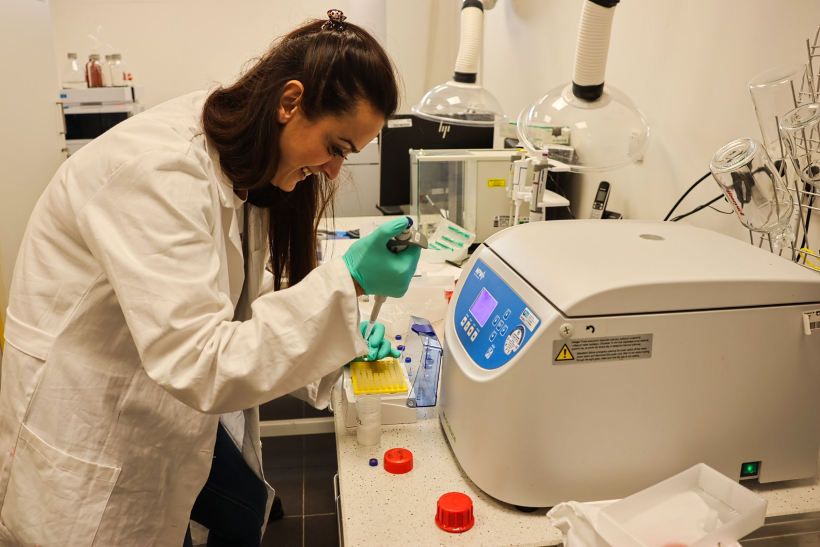
I think what I enjoy most about scientific work is how deeply interesting it is, and also challenging at some points. But I also like the independence that science offers. Apart from science, I often found myself "overqualified" in the job market, which was sometimes complicated. However, the issue of finance plays a big role in my story. I spent a lot of time looking for ways to stay in science, because financial uncertainty is often the biggest obstacle. Science requires not only knowledge, but also practical experience and, above all, persistent, hard work. Nevertheless, I really like science and I think I have chosen the right path.
You were awarded the prestigious ERA Talents grant within the framework of the Marie Skłodowska-Curie Actions. What does this achievement mean to you?
It means a lot to me, mainly because it advances my scientific career. It is a very prestigious grant, and it is certainly not easy to obtain. This type of individual scholarship is intended to support young scientists and researchers at the beginning of their professional careers, which I definitely qualified for. For me, it was a great opportunity to connect my previous work, combining industrial and academic experience with new research. I think it was the best way to advance in science at the time. It's amazing that today, thanks to the internet, we have the opportunity to follow calls for proposals and participate in similar programmes from anywhere in the world. I think it's great that such opportunities are also open to people from smaller countries.
How challenging was it to prepare the project proposal and succeed in such strong competition? After all, this is a very prestigious grant.
It was challenging. Writing the application itself is not that difficult, but making competitive proposal is the real challenge. You have to meet a lot of conditions and requirements because everything is evaluated according to precisely defined criteria. The professors and laboratory in Slovenia helped me a lot with project writing. They had experience in writing projects and gave me valuable advice. I also took part in various courses and training sessions myself, because I knew I had a lot to learn. Once you realize that you don't know something, you have to start actively looking for ways to learn it. The internet was a huge help to me in this regard. The lab helped me with the project design and practical experience from previous calls, and I already had a few ideas from previous applications. I worked on it for a long time. It became a bit of a personal story for me because I put a lot of energy and determination into it. In the end, I waited two years for the grant before I actually got it.
Could you tell us a bit about your BojaS project? How would you explain it to someone who isn’t a scientist?
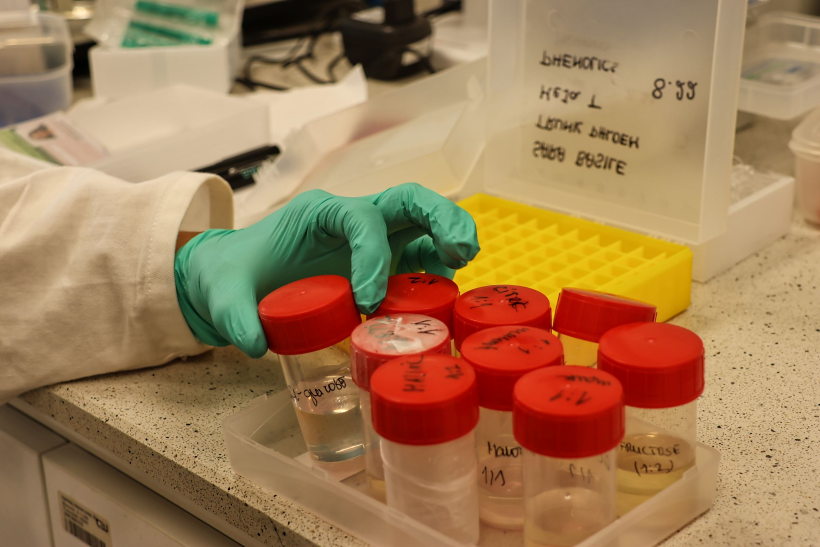
The project focuses on brewery waste. Every year, a huge amount of this waste is produced, and most of it is simply thrown away. However, we are trying to use this waste as a source for obtaining valuable and useful chemicals compounds. The main goal is to convert this waste into phenolic compounds, using green sustainable chemical methods. These small chemical molecules have significant biological effects, and are widely used in pharmaceutical and food industries. Phenol compounds are literally a treasure trove because they have very beneficial health properties, especially antioxidant properties. When we are ill, we often take vitamin C precisely because of its antioxidant properties. Phenolic compounds, for instance, could have ten times stronger antioxidants properties than vitamin C.
Ten times stronger, that’s interesting.
Yes. And importantly, most similar compounds, like vitamin C, are currently produced synthetically using chemical methods. These are used in the food, pharmaceutical, and other industries. However, at a time when the environment is increasingly burdened with chemicals and waste, it’s important to look for gentler and more sustainable approaches. This project is based on the principles of the circular bioeconomy – the idea that we should make the best use of what we already have and reintegrate waste materials into production. In our case, this means not producing chemical compounds synthetically, but isolating them naturally from brewery waste. This has both ecological and economic benefits. These phenolic compounds can have added value, for example, in the food industry or other industrial sectors. We are developing new biochemical methods that allow these compounds to be extracted safely, without the use of toxic solvents and without the need for complex purification. The project does not only advance scientific knowledge in the field, but it has also applied benefits, since we want to use these phenols directly as additives to extend shelf life of meat products.
Your research is now being carried out at the Faculty of Forestry and Wood Sciences at CZU in Prague. How does the modern equipment and technical infrastructure of the Faculty support your work?
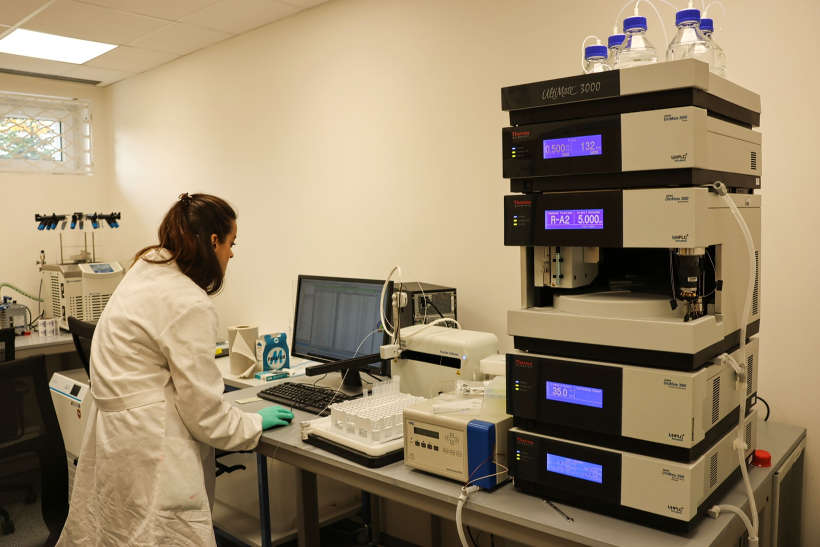
It plays an absolutely key role. In our laboratory at the FLD, we have access to cutting-edge research infrastructure and analytical instruments that are essential for this project. These include, for example, an HPLC chromatographic system, which we use to analyse and identify individual phenolic compounds. Using these methods, we can confirm the presence of specific compounds, such as those currently used as dietary supplements, for example rutin or quercetin. We are not focused on their production, but on their identification and chemical verification that they are indeed derived from brewery waste. We also study their structure and how these molecules react and interact with other components in the waste. To carry out this research, we need really high-quality facilities and modern instruments. Thanks to this infrastructure, we are able to implement the project in its full scope. Even when applying for the MSCA project, we had to demonstrate that the results generated here would be practically applicable. And thanks to the equipment at FLD CZU, this is indeed possible. The results we obtain here have the potential to be well applied outside the academic environment as well.
Your mentor at the Faculty is Alina Kalyniuk. What is the cooperation like?
Yes, Alina has a great deal of experience in analytical chemistry, both with the instruments and with the research itself. I bring to the collaboration my knowledge and experience from previous work, but I also learn a lot of practical skills from her. Working with her is very pleasant; she is approachable and open. Another major advantage is that she already has established facilities and experience with similar topics at the Faculty. For me, this makes things much easier than if I had arrived somewhere where no one had previously conducted this type of research.
What advice would you give to young people who dream of a scientific career?
Perhaps I’m not exactly the right person to give advice on how to dream about science (laughs). I think it’s important for young people to do what truly fulfils them. When something interests you, it becomes easier to learn, to stick with it, and to think deeply about it. At the same time, it’s important to be prepared for the fact that reality is often different from what we learn at school. Our education system and approach to learning should teach young people not only knowledge, but also that the world isn’t perfect. Sometimes you might feel a little disappointed because what you take away from school doesn’t always match reality. That’s why it’s important to be open, adaptable, and ready for different situations. And this applies to life in general – it’s not always easy. Science also has its pros and cons. Sometimes it’s fascinating work; other times it’s routine. But for me, it’s always primarily about values – why you do it and what it brings you.
Bojana, do you have a scientific dream or a major challenge that you would like to accomplish in the future?
I have many dreams, but I’m not sure all of them are entirely realistic. I try not to dream too “big,” because that can sometimes lead to disappointment. I prefer to stay grounded and focus on what is achievable. What I would most like is to secure a few more grants, continue my research, and publish more scientific papers. These are the goals that currently motivate me the most.
To finish off, I have a light-hearted question. If you had to choose one thing – a physical object – to represent you on your desk, what would it be and why?
(laughs) On my desk? Probably my diary. Although I don’t actually write in it much, it’s small and practical. It has different pages, some completely blank, others full of notes. It’s a bit like my life – sometimes full of ideas and work, other times quieter. I also like it when it has a nice cover; that matters to me.