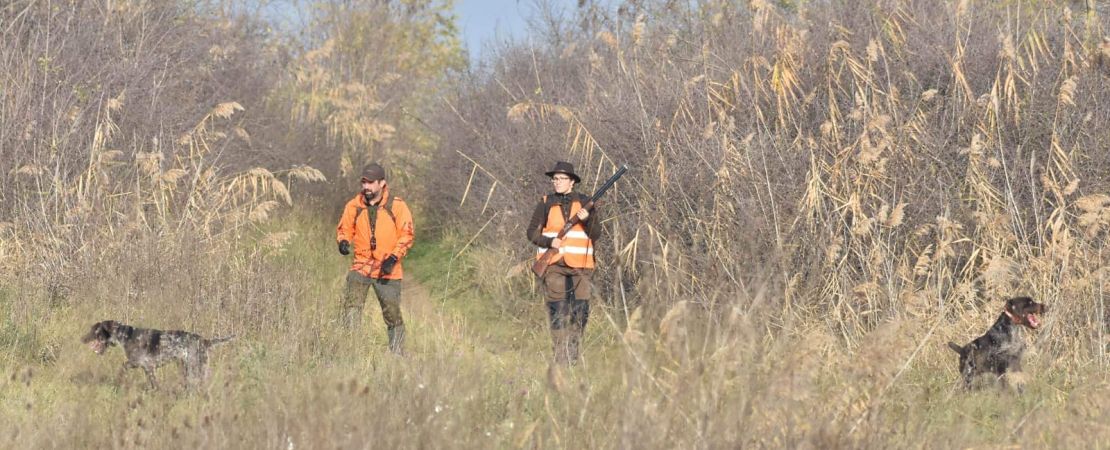
What does the work of the Vice-Dean for Education involve? And why is it important to talk about hunting tourism, even though it often provokes strong emotions? Ing. et Ing. Markéta Kalábová, Ph.D., speaks openly about her path to FLD, about what it is like to lead the academic agenda, and about the international SHUNTDIEM project. This project connects students and professionals through digital tools in the field of hunting tourism.
Interview conducted by: Hana Brinkeová, June 2025
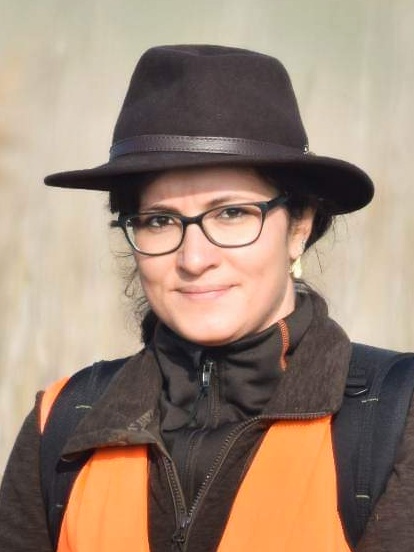
Markéta, what was your path to FLD, and what brought you here?
After finishing my studies at a grammar school in Jihlava, I had very broad interests. I come from a hunting family: my grandfather, father, and uncle are all hunters, and my father is also a trained forest engineer from Brno. My mother studied at the University of Economics, Prague. Based on various recommendations, I chose a field that would allow me to earn a living and support my hobbies in the future, so I enrolled at the University of Economics, Faculty of International Relations, majoring in International Trade. However, during my studies I began to miss topics related to natural sciences. In the third year of my bachelor’s programme, I therefore applied for part-time studies in Forestry at FLD. This means that FLD is also my alma mater. In the end, I completed both my bachelor’s and master’s degrees in Forest Engineering here, while at the same time finishing my doctorate at the University of Economics. During my studies there, I also gained practical experience through work for various companies, such as Orgit, Hewlett-Packard, Photodienst Brno, and Meet2grow. That said, I must admit that this did not appeal to me as much as I had always imagined when thinking about working for international companies.
So was it ultimately the combination of economics and your interest in the natural sciences that led you to us?
Yes, exactly. After completing my master’s degree, I was offered a doctoral position at the Department of Tourism at the University of Economics, Prague, and I connected the topic with my greatest hobby, hunting. I chose hunting tourism, a subject for which data and information were largely missing at the time. From an early age, I had seen foreign hunters coming to the Czech Republic and paying relatively large sums of money for hunting opportunities, yet there were no statistics or systematic information about this phenomenon.
What was it like for you to enter a completely new environment, and what was your first impression of the Faculty?
I actually enjoyed it very much, precisely because it was different. Economic disciplines are not quite as engaging or interesting. I perceived the University of Economics, Prague as a highly competitive environment, where teachers were the authority and students were at the very bottom of the hierarchy. Here at FLD, by contrast, there was a family-like atmosphere. The teachers struck me as incredibly passionate about what they do; they genuinely enjoyed their work and were able to pass that enthusiasm on to the students. I enjoyed going out into the field, listening to them talk about trees, plants, insects, and about how everything functions together as a whole. That was the environment that captivated me completely.
How long have you actually been working at the Faculty?
Well, in fact since 2017. After completing my master’s degree, I started working on the project KZ6: A model for the governance and development of fruit orchards as important urban ecosystems thanks to my diploma thesis supervisor, Ing. Jakub Horák, PhD, and I remained in close contact with the Faculty. At the same time, I was working as an academic at the University of Economics, Prague, later serving as Deputy Head of the Department. In the end, I chose FLD, and since 2019 I have been Vice-Dean for Education.
Could you describe what your role as Vice-Dean involves? What responsibilities does it include?
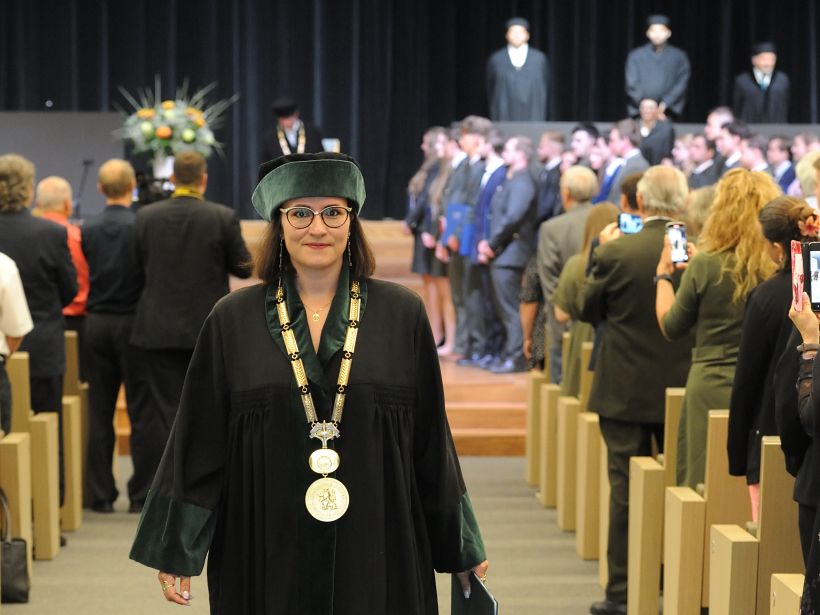
The position has a very broad scope. It starts with the admissions process and ends with graduation ceremonies. At the outset, we deal with the overall framework of admissions: what the content will be, what the conditions for admission to study are, which applicants we want to reach, and which study programmes we will open. Once students enrol, they go through a compulsory course entitled Introduction to Studies and Occupational Health and Safety, which I teach. I try to provide them with as much information as possible: what their studies will look like, what to pay attention to, and how to navigate the system. They also learn something about personal development and the basics of academic writing. For many newcomers, this is an entirely new experience. Then, we deal with the day-to-day agenda throughout the course of study: deciding on students’ requests related to their studies, communicating with guarantors of study programmes, making changes to programmes, accrediting new programmes, changes of course guarantors, and so on. Together with heads of departments, I am involved in selecting early-career researchers for departmental positions. I also organise a range of out-of-semester and preparatory courses for students, as well as various competitions in cooperation with professional practice. At the end of the summer semester, state final examinations and graduation ceremonies take place, where I act as a promotor; this is where my role in their studies comes to an end. In addition to matters directly related to students’ studies, I also participate in the assessment of accreditations at other faculties, take part in university-level committees, and contribute to discussions on issues such as the Study and Examination Regulations and other internal university regulations.
You are also involved in training teaching staff, if I am not mistaken?
Yes, that is the second major area of my agenda – a focus on the quality of education through human resources. We try to organise various training courses for academic staff, both in the Czech Republic and abroad, for example in didactics or in emerging phenomena such as artificial intelligence. We support the preparation of teaching materials and innovative teaching methods. We also host visiting academics from abroad, who share their experience with students outside the standard study programmes in order to enrich teaching. In addition, I am responsible for the agenda related to international students, as well as outgoing and incoming student mobility, particularly within the Erasmus+ programme.
And more recently, student counselling as well?
Yes, we have a study counsellor who supports students with specific needs. From this year onwards, we have also introduced support for talented students. We are developing a concept for the systematic development of talented students and looking for ways to identify such individuals, reach out to them, and offer them something extra. For example, we have introduced mathematics teaching at two different levels, and we want to continue this approach in other subjects as well.
How does FLD promote the development of critical thinking among students, particularly in the era of artificial intelligence and the rapid spread of misinformation?
We start as early as the Introduction to Studies and Occupational Health and Safety course with first-year students, and we continue through lectures delivered by the CZU Library as well as within individual courses. I would like every course syllabus to incorporate artificial intelligence and critical thinking. We should demonstrate what AI can do, but also where its limits lie. I tell my colleagues: “Show students what answer AI gave you to a particular query, and where they should verify it. Teach them to ask the right questions and to be sceptical where necessary.” Because there is diversity of opinion among colleagues regarding the use of AI, we are able to pass on this full spectrum of perspectives to students. Moreover, each teacher knows best whether artificial intelligence can be helpful in their course or whether it might be more harmful. And who else should be responsible for checking whether information generated by AI is actually correct?
What matters most to you in your relationship with students?
Communication. We definitely focus above all on communicating with students and collecting feedback, for example through the guarantors of study programmes. We regularly carry out questionnaire surveys for individual study programmes, asking what students enjoy, what they would like to improve, and what they feel is missing. This allows us to continuously enhance the quality of courses and keep pace with both current developments and students’ interests. Of course, it is not always possible to adapt everything exactly to students’ wishes. Sometimes they only come to appreciate certain things later, for example once they are in employment, thinking back to something that did not interest them at the time and realising: Ah, this is actually useful. It is often a matter of finding the right balance. Another important aspect is a friendly atmosphere, which students themselves frequently mention, and which it is important to maintain. We also have truly top-class facilities, modern buildings and infrastructure, which represent a major added value for us; students have a very good support environment here. We also support student association activities, which I consider to be very important. Some students are incredibly talented and proactive. They take part in various competitions as well, such as hunting horn, deer calling, and shooting competitions. We are glad that we can support them in these activities.
Where do you see the main strengths of FLD in terms of education and its connection with practice?
I would certainly highlight the top-class facilities, friendly atmosphere, and enthusiasm of the teaching staff, which I believe is continually passed on into teaching. I also see great strength in science and research. We carry out excellent research, and I emphasise this even during open days, because the way the Faculty functions in science and research is reflected in teaching; we do not teach solely from textbooks, but bring students up-to-date knowledge drawn from our own research work. Another major strength, in my view, lies in the development of cooperation with practice. We have established collaboration with various partners from organisations and companies in the forestry and wood-processing sector. A wide range of bachelor’s and master’s theses is being produced that address real-world problems faced by specific companies and organisations. Companies propose topics that they need to tackle in practice, and our students work on them. That is actually a great thing. So these are, for me, the key strengths, and perhaps also what distinguishes us from other universities in terms of our approach to students.
Do you manage to combine your administrative duties with your other professional activities?
I have to say that it is not easy. Over the summer, it is of course a bit calmer and one can catch one’s breath, but during the semester it is an incredible “whirlwind”. It is becoming increasingly difficult to keep everything in balance – the agenda, responsibility, day-to-day operations, weekend work – all of that is part of the job. You really have to enjoy it. It would not be possible for someone who was not genuinely passionate about it. I like things to be clearly set up, so it suits me when the system runs according to established rules. At the same time, alongside my Vice-Dean agenda I also have to function as an academic staff member in the position of an assistant professor. I feel that if we set certain minimum requirements at FLD for what an assistant professor should fulfil in the areas of teaching as well as science and research, then I also want to meet those requirements myself, which is relatively challenging given the scope of my Vice-Dean responsibilities. My own organisation and discipline help me a great deal in all of this. I have a to-do list for every single day, and I cannot function without it anymore. I have had this system since secondary school – and even though it can sometimes be a bit scary, it helps me keep things under control and maintain at least a somewhat clear head.
Let’s take a look at your current project, SHUNTDIEM. What can the general public imagine under this name? It almost sounds like a spell.
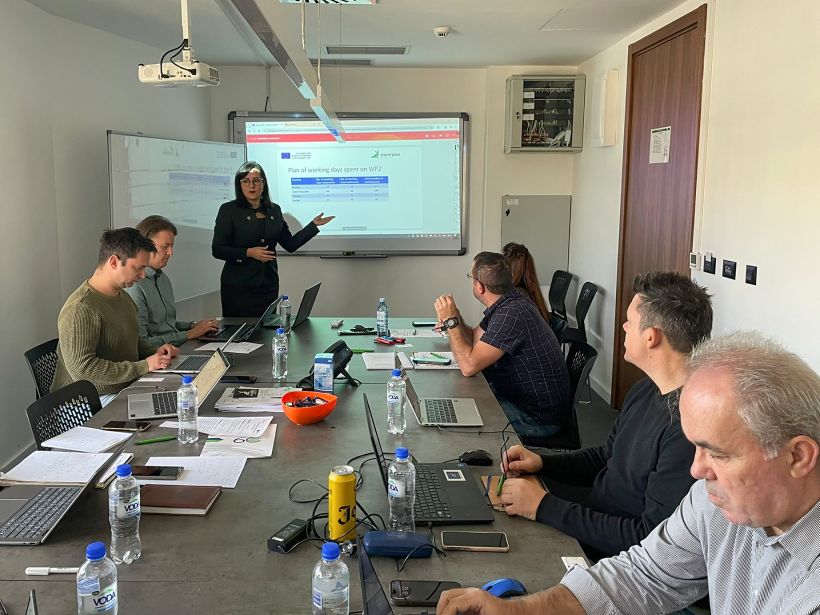
It originated as an acronym derived from the English title Strengthening Hunting Tourism Students’ Competences Through Connecting with Stakeholders via Digitisation of Educational Materials. Initially, we also considered the name Hunt Diem, in reference to Carpe Diem, but in the end we linked it more closely to the idea of developing students’ competences in hunting tourism, which led to the name SHUNTDIEM. The name reflects our focus on improving and strengthening students’ competences in the field of hunting tourism through digitalisation and digital technologies. It is an international project implemented within the Erasmus+ programme.
So the project focuses on hunting tourism, but probably not in the way most people imagine it. Why is it important to address this topic right now?
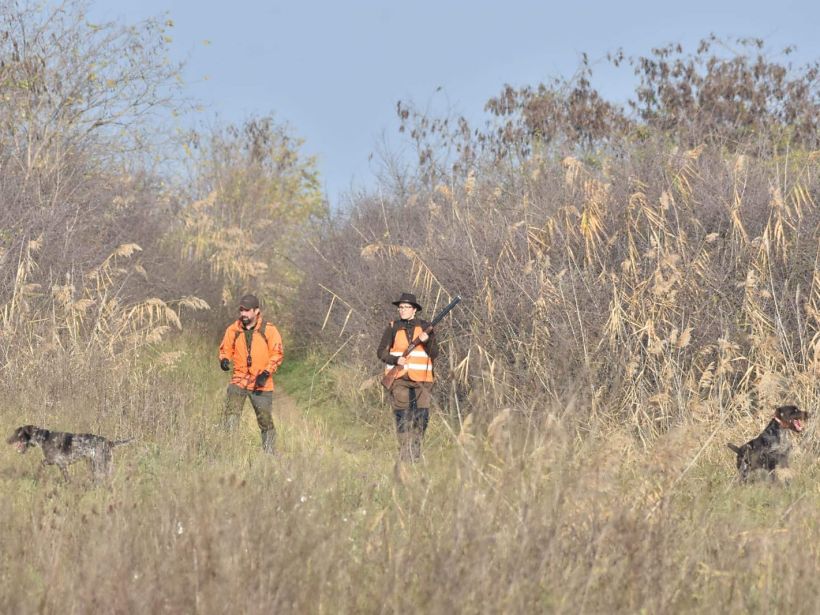
It is a topic that has been gaining in importance in recent years, yet for a long time there has been very little public awareness of it in our context. At the same time, it is a phenomenon that extends into wildlife management, regional economy, and the way hunting is perceived by the public. It is important to realise what all is encompassed by the term “hunting tourism”. At the Faculty, we also have a study programme focused on hunting, and we address hunting not only in connection with game management, but also in relation to the environment in which game lives. In the Czech Republic, however, we are currently facing a problem: on the one hand, the number of hunters is declining, while on the other hand the number of game animals, especially ungulates, is increasing. This is a serious issue, because if there are not enough hunters to help maintain balance in game populations, we need to seek alternatives. Hunting tourism can be one such option. In principle, a hunter may travel from another part of the Czech Republic, we have clients from abroad – and hunting fees are often relatively high. This brings not only a direct economic benefit, but also helps address the problem of overabundant game populations. Of course, it is important to lead a discussion about what types of animals are hunted, because in hunting tourism there is often demand primarily for trophy animals, which may not be ideal from the perspective of game management. It is always necessary to think in terms of sustainable development. An interesting comparison can be made with the Scandinavian system, where a hunter does not need to shoot a stag with the largest trophy; rather, they simply want to hunt game and are often willing to hunt females as well. This is exactly the kind of approach that needs to be discussed and promoted here as well. So it is not just about tourism, but also about education, awareness-raising, and a sustainable approach to wildlife management.
What practical outcomes will the project deliver?
There will be several outputs, all of which have real practical applications. The first is a digitised hunting tourism glossary in the form of a mobile application. It will be multilingual, including English as well as the languages of the partner countries. It will help both students and hunting service providers, who often encounter language barriers. Either they do not speak a foreign language at all, or, if they do, they lack the necessary technical terminology and hunting slang. Another major output is the creation of a joint subject that will be taught simultaneously at all four partner universities. We will follow the standard format of a 90-minute lecture followed by a 90-minute seminar, but within the seminar I would very much like students to engage in as much discussion as possible. For students, this means an opportunity to experience international education systems, work in international teams, and overcome both language and cultural barriers. We are also preparing a specialised website that will be available in all partner languages and will provide information on hunting, specifically what is required for legal hunting in a given country, the applicable procedures, permitted hunting methods, necessary documents, fees, the transport of firearms, and so on. The aim is to ensure that if hunters wish to hunt abroad, they do not have to search for this information long and will be able to find everything in one place and in their own language. At the end of the project, we are also preparing a summer school for students in Croatia, where we will visit a number of attractive hunting grounds and continue with practical training and discussions. The programme will also include field trips in the partner countries’ home institutions, as well as lectures and events for the general public. It is important that we explain what hunting tourism actually means, how it works, and what benefits it can bring.
Have you also encountered negative reactions as part of these awareness-raising activities?
The most striking recent experience I probably have is from the Women and Sustainable Hunting conference in Italy. Part of the programme was a visit to a hunting trade fair in Verona, and when my colleague from Serbia and I were leaving, there was a group of activists opposing the killing of animals standing outside. The police were present as well, and it was not a pleasant experience at all. They were shouting at us and trying to get close to us, but fortunately the police managed the situation. A similarly strong reaction was triggered by a podcast in which I spoke about hunting tourism and our project. I was disappointed that most people did not listen to the entire episode and reacted only to a clipped excerpt. That is precisely the problem of our time – quick judgement without any effort to understand or to look into the issue more deeply. This is why I consider it crucial that we continue with awareness-raising. It is a controversial topic, and we must not give up. We must not tell ourselves: “They will not understand it anyway, so we will not talk about it.” On the contrary – it is important to communicate clearly and openly, and not to be afraid to explain the essence of the matter.
Now for something more cheerful. What do you personally enjoy most about working on the SHUNTDIEM project, what motivates you the most?
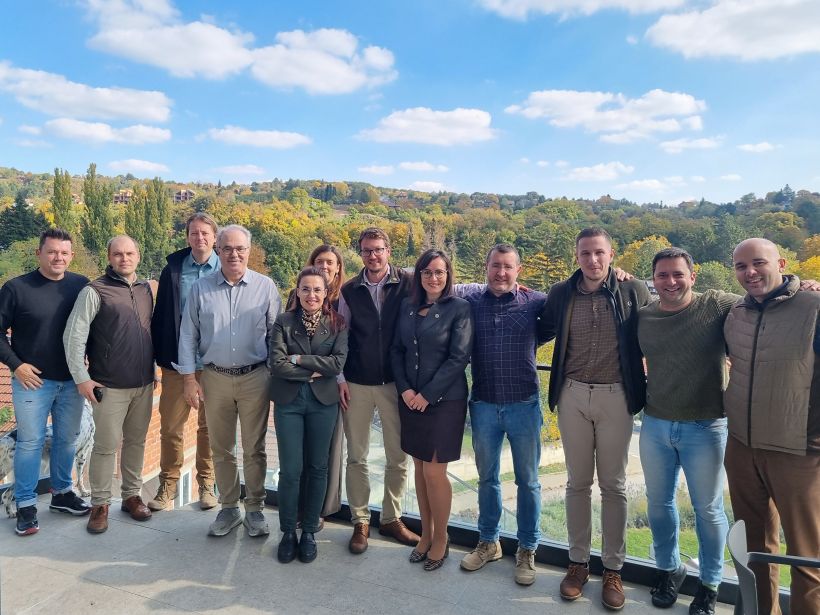
Projects like this, with an international dimension, are excellent – I really value that broader perspective. Communicating with international partners opens up new ways of thinking for me. Each country has a different system, different priorities, and a different approach to hunting, and that is immensely enriching. At the same time, it is also a challenge. Things that would normally be taken for granted suddenly need to be thought through more carefully and explained in greater detail. But that is exactly where I see the real value – in broadening one’s horizons and in searching for a common language across cultures. It is a great benefit for our students as well: they can enrol in a course taught in English, which enriches their experience further. I am truly grateful that we have these opportunities at the Faculty, and that we are able to coordinate the project, whether at the national level in the Czech Republic or in an international context.
If you were to describe our Faculty in three words, what would they be?
The first word that came to my mind is “family”. Because I mentioned the family-like atmosphere – and for me, when I spend most of my time at work, those relationships really do grow into something like a family. The second word is “high-quality science”. I think that is extremely important – not only because we conduct it ourselves, but also because we are able to translate it into teaching. And the third word? “Forest”.
I have one “bonus” question to lighten things up a bit. If you had to choose one object (and I really mean a physical thing) that would symbolise you on your desk, what would it be – and why?
That is a really difficult question to end with! The first thing that comes to mind right now is a mobile phone – because it perfectly captures what my work is like. My job is very much about multitasking, and a phone evokes the idea that everything is there in one place – different applications for all kinds of purposes. It is an object I always have with me, and it reflects my working rhythm exactly – diversity, mobility, constantly switching between tasks – so yes, probably a mobile phone.